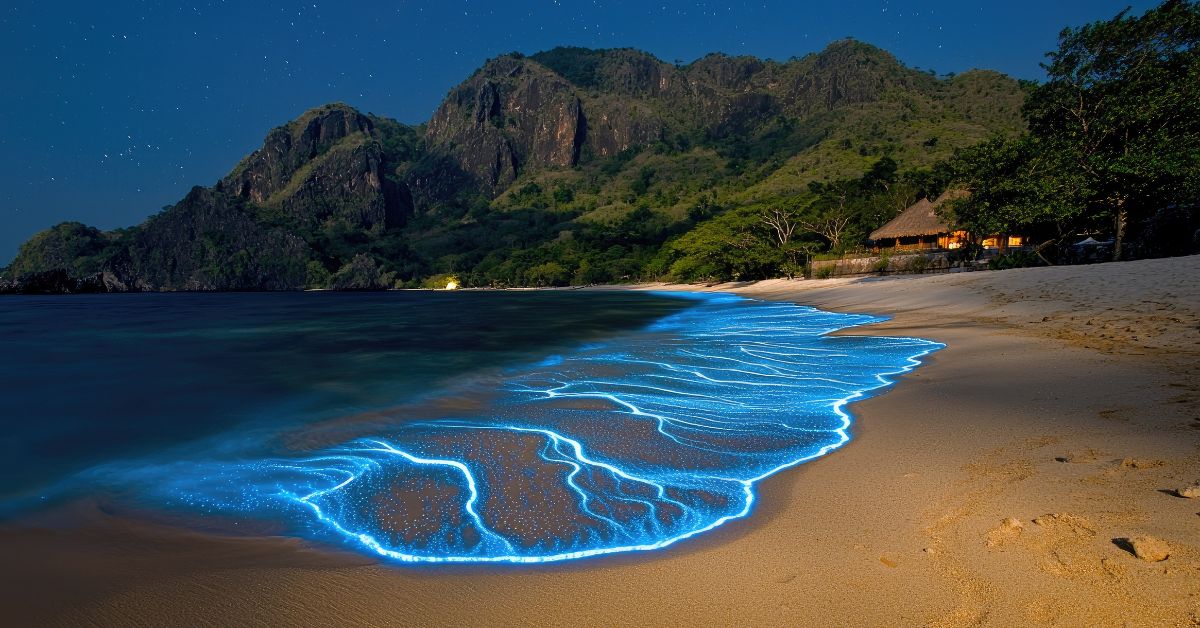
Few things in this world are as magical as watching the sea exude a luminescent blue glow on a moonless night. With glittering blue sparkles, the clear turquoise water seemingly painted with neon paintbrushes, the spectacle of bioluminescence has become a major nighttime travel trend among visitors to the Andaman & Nicobar Islands.
If you’ve been imagining seeing glowing blue waves, sparkling fairy trails behind your feet, or a kayak carving through azure water as if from a fantasy film, the Andamans are the place to make that dream come true. In fact, so many tourists come to the Andamans just for the bioluminescence that many tour companies, including travel planners like Andaman Fiesta, now offer bioluminescence nights as part of their regular packages.
In this detailed guide, we cover everything you need to know, from what bioluminescence is, when and where to see it in the Andamans, safety and photography tips, to planning your ideal bioluminescence trip.
What Is Bioluminescence?
Bioluminescence is a phenomenon where living organisms naturally produce light. In the sea, this is most commonly caused by plankton, specifically a type of microscopic algae called dinoflagellates. When a dinoflagellate is disturbed in any way, a wave, a flick of the hand, a moving boat, it reacts by releasing a blue glow.
Why does it glow?
Plankton create a brief blue spark in self-defence. It’s either to scare away predators or to attract the predators of its predators.
Why blue?
Light from bioluminescent sea creatures almost always emits a blue-green wavelength. Blue-green light travels the farthest in water, which is why most species that produce their own light use this colour.
What does it look like?
- Blue sparkles on the wet sand
- Neon-blue waves breaking at the shore
- Glowing trails in the sand/water around your feet while walking in shallow water
- A kayak gliding through the water like a glowing paint stroke
- If the conditions are just right, the whole beach is shimmering with each wave
It is not a dramatic, in-your-face show of nature. It’s subtle but very powerful, with an otherworldly quality. In India, the Andaman Islands offer some of the best visibility of the phenomenon.
Why the Andaman Islands Are Perfect for Bioluminescence
The Andaman Islands are considered one of the best places in India, and even the whole of Southeast Asia, to witness a glowing sea. This is for a few major reasons:
- Clean, unpolluted waters – The Andamans are less commercialised and developed than most mainland coastal destinations.
- Little artificial light – Dark beaches make the glow more visible.
- Warm tropical waters – Ideal conditions for plankton to survive and thrive.
- Sheltered bays and calm seas – Shallow, still waters help plankton gather near the shore.
- High concentration of dinoflagellates – Especially in Havelock and Neil Island areas.
The combination of these conditions creates ideal circumstances for glowing beaches, especially on moonless nights.
Best Places to See Bioluminescence in the Andamans
These are the top beach destinations where travellers frequently reported water that glows. Note: visiting some places may require a local guide or a kayak tour for a safe, ideal experience.
1. Havelock Island (Swaraj Dweep) – The Most Popular Spot
Havelock Island is the most famous spot for bioluminescence in the Andamans. It has some of the best conditions, pristine beaches, low light pollution, and the glow is almost always present during the right season.
Best Beaches in Havelock for Bioluminescence
- Vijaynagar Beach – By far the hotspot for glowing beaches in the Andamans. Many travellers have reported seeing bright blue sparkles in the waves at night.
- Govind Nagar Beach – Long stretch of coastline with shallow waters.
- Radhanagar Beach – May not be very consistent, but some parts of this world-famous sunset beach have also reported sparkling plankton late at night.
Why is Havelock the best?
- Calm waters
- Easy accessibility
- Night kayaking tours
- Resorts in proximity to bioluminescent beaches
- Guides who know which spots glow best
Due to its high popularity, many travel providers, including Andaman Fiesta, organise guided night bioluminescence walks/kayaking here.
2. Neil Island (Shaheed Dweep) – Quiet & Perfectly Dark
If you prefer peaceful, quieter surroundings, this is where to head. Neil Island beaches are less crowded and commercialised than Havelock, making it much easier to find a pitch-black stretch of sand for bioluminescence viewing.
Best Beaches for Bioluminescence in Neil Island
- Laxmanpur Beach 1 & 2 – Wide and almost secluded beaches with some of the best night-sky visibility, making the glowing water appear even more surreal.
- Bharatpur Beach – Shallow, clear waters and gentle waves are ideal for glow.
- Sitapur Beach – Not very consistent, but some travellers have reported seeing glowing sand and waves on a particular night.
3. Port Blair – Night Kayaking Experiences
Port Blair is the capital city of the Andamans, and as such is too built-up to have such natural wonders on most of its beaches. But several lesser-known lagoons around the town are bioluminescent hotspots.
- Mangrove creeks around Port Blair – Kayaking companies run night kayaking tours, which often include mangrove exploration as well as bioluminescence.
- Beaches near Corbyn’s Cove (occasionally) – Not as common, but occasional reports of glowing near Corbyn’s Cove during high plankton bloom seasons.
If you want an adventurous experience and do not mind venturing a bit away from the city, night kayak tours near Port Blair are worth checking out.
When Is the Best Time to See Bioluminescence in the Andamans?
The phenomenon of bioluminescence depends on several factors, but here’s what we find works best.
1. Moonless or Low-Moon Nights – The darker the night, the brighter the glow.
2. Clear Weather – Cloudy/rainy days mean lower visibility.
3. Calm Sea Conditions – Heavy waves take plankton deeper into the sea, lowering visibility.
4. Dry Season (November to May) – This is an ideal plankton bloom time since the water is:
- clear
- warm
- less disturbed by storms
Worst time:
June to September (monsoons), when the water becomes murky.
How to See Bioluminescence Safely
Bioluminescence is a sensitive natural phenomenon that must be experienced carefully.
- Don’t use flashlights directly on the water.
- White light washes out visibility.
- Don’t swim at bioluminescence viewing spots.
- Swimming is not safe due to currents and marine life.
- Go with a guide.
- Local guides know safe areas and tide timings.
- Don’t touch the glowing water.
- Disturbing plankton affects its natural behaviour.
- Wear beach shoes/sandals.
- Some beaches have sharp rocks and coral.
- Go on a guided tour, like a night kayaking tour.
- After and better views.
How to Photograph Bioluminescence in the Andaman
Capturing the glow is not easy, but with a few tips, it is possible with the right camera settings.
Camera settings to use:
- Long exposure: 10–30 seconds
- ISO: 1600–3200
- Aperture: f/1.4–f/2.8
- Tripod: must-have
- Turn off flash
- Phone photography tips
- Use Night Mode
- Set the longest possible exposure
- Keep the phone very still
- Some newer phones capture it fairly well
Remember: bioluminescence is often very subtle—you have to allow your eyes to adjust to the darkness.
Tips to Increase Your Chances of Seeing Bioluminescence
Here are a few things you can do to increase your chances of seeing bioluminescence.
1. Stay on islands with low light pollution
Best options: Havelock, Neil.
2. Do not go on full moon nights
Even strong moonlight can overpower the glow.
3. Choose beaches with shallow waters
Shallow waves are where plankton glow the best.
4. Stay for at least 2–3 nights on bioluminescence-friendly islands
The glow is unpredictable; the more nights = the higher the chances.
5. Ask local people
Fishermen, resort staff, and guides will always know current conditions.
A Sample Itinerary to Experience Bioluminescence in the Andamans
Here is a simple 5-day trip itinerary that gives you the best chance of experiencing the glow.
Day 1 – Arrive in Port Blair
- Check into the hotel
- Visit Corbyn’s Cove for sunset
- Optional: Night kayaking from the nearby lagoon
Day 2 – Transfer to Havelock Island (Swaraj Dweep)
- Check into a beachside resort (preferably near Beach 3 or 5)
- Relax or go scuba diving
- Night: Guided bioluminescence walk on Vijaynagar Beach
Day 3 – Explore Havelock + Bioluminescence Night Kayaking
- Visit Radhanagar Beach
- Optional activities: parasailing, snorkelling
- Night: Bioluminescence kayak tour
Day 4 – Travel to Neil Island (Shaheed Dweep)
- Check in to the resort
- Visit Natural Bridge, Bharatpur Beach
- Night: Laxmanpur Beach bioluminescence viewing
Day 5 – Return to Port Blair
- Shopping, museums
- Flight back
Role of Travel Organisers Like Andaman Fiesta
Since the bioluminescence viewing highly depends on:
- tides
- moon cycles
- weather
- plankton density
Many visitors now choose to book through Andaman Fiesta or other travel organisers who:
- know which beaches are the most active
- Keep a track of recent bioluminescence sightings
- arrange nighttime guides
- Provide safe kayaking equipment
- ensure no disturbance to marine life
- can include travel + stay + guided night activities
Having an expert handle the entire trip significantly increases the chances of witnessing the glowing effect at its peak.
Why Seeing Bioluminescence in Andaman Is a Bucket-List Experience
If you are still not convinced whether it’s worth it to plan your trip around this natural wonder, here are some reasons why the answer is YES:
- It’s incredibly rare
- Only a few locations in the world have consistently glowing seas.
- It’s a natural wonder
- No special effects, no human engineering—just nature at its finest.
- Magical nighttime experience
- Walking on a glowing beach or kayaking through sparkling water is something you will remember forever.
- Perfect for romantic/adventure trips
- Many couples experience it as a part of honeymoon packages, while adventure travellers choose night kayaking.
- Unique to island life
- It cannot be experienced in crowded or polluted coastlines.
Conclusion
Bioluminescence in the Andaman Islands is one of the most magical travel experiences you can witness in India. For a nature lover, a photographer, a honeymooner, an adventure seeker, or a curious traveller, watching the sea glow neon blue at night is a once-in-a-lifetime moment.
From the quiet shores of Neil Island to the lively beaches of Havelock, the glowing waters tell a story of nature’s beauty and mystery. With proper planning (or booking from experienced travel providers like Andaman Fiesta), you can significantly increase your chances of witnessing this breathtaking spectacle.
If you love raw natural beauty, starry skies, peaceful beaches, and unforgettable experiences, then bioluminescence in Andaman should be at the top of your travel bucket list.